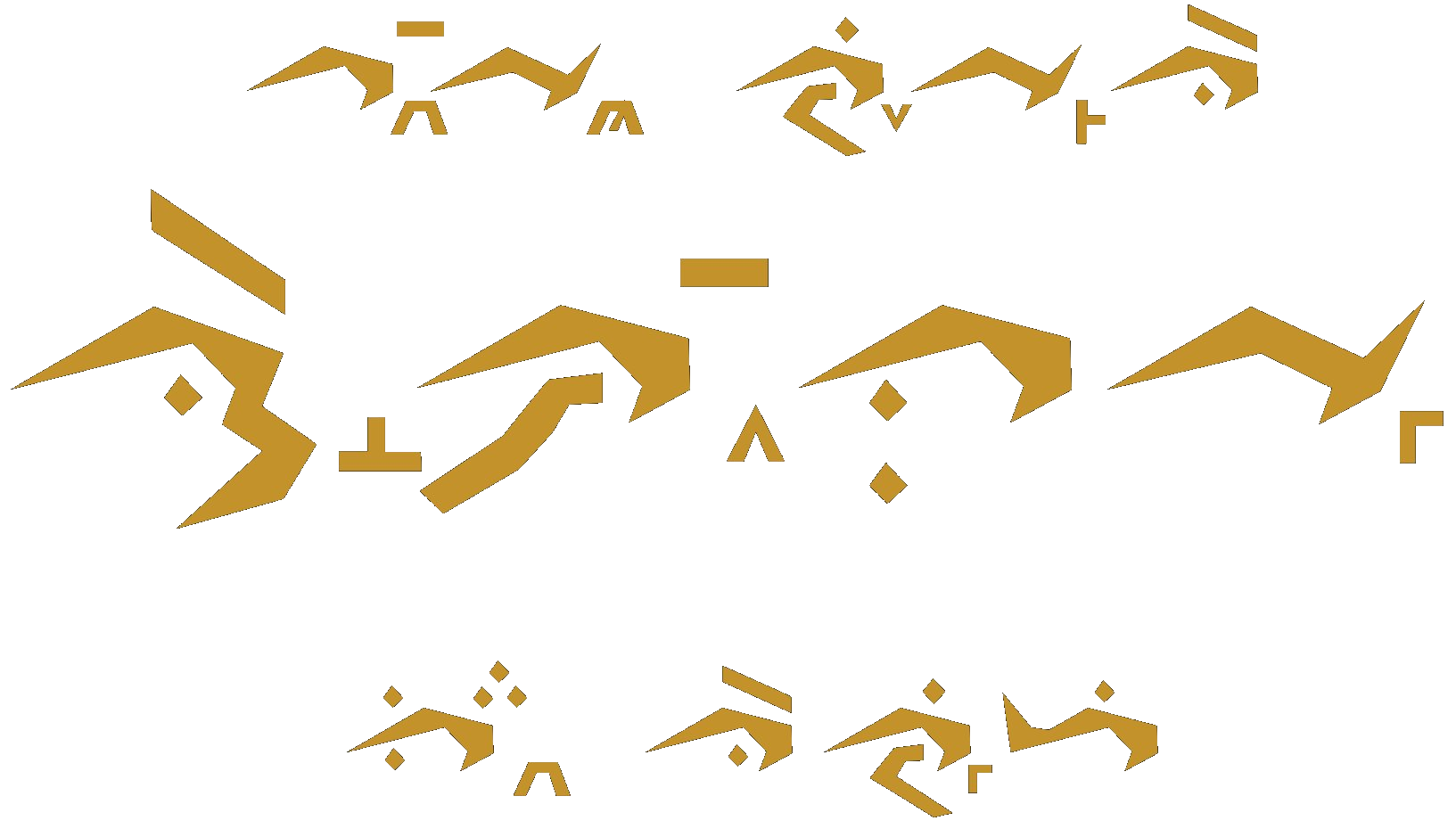
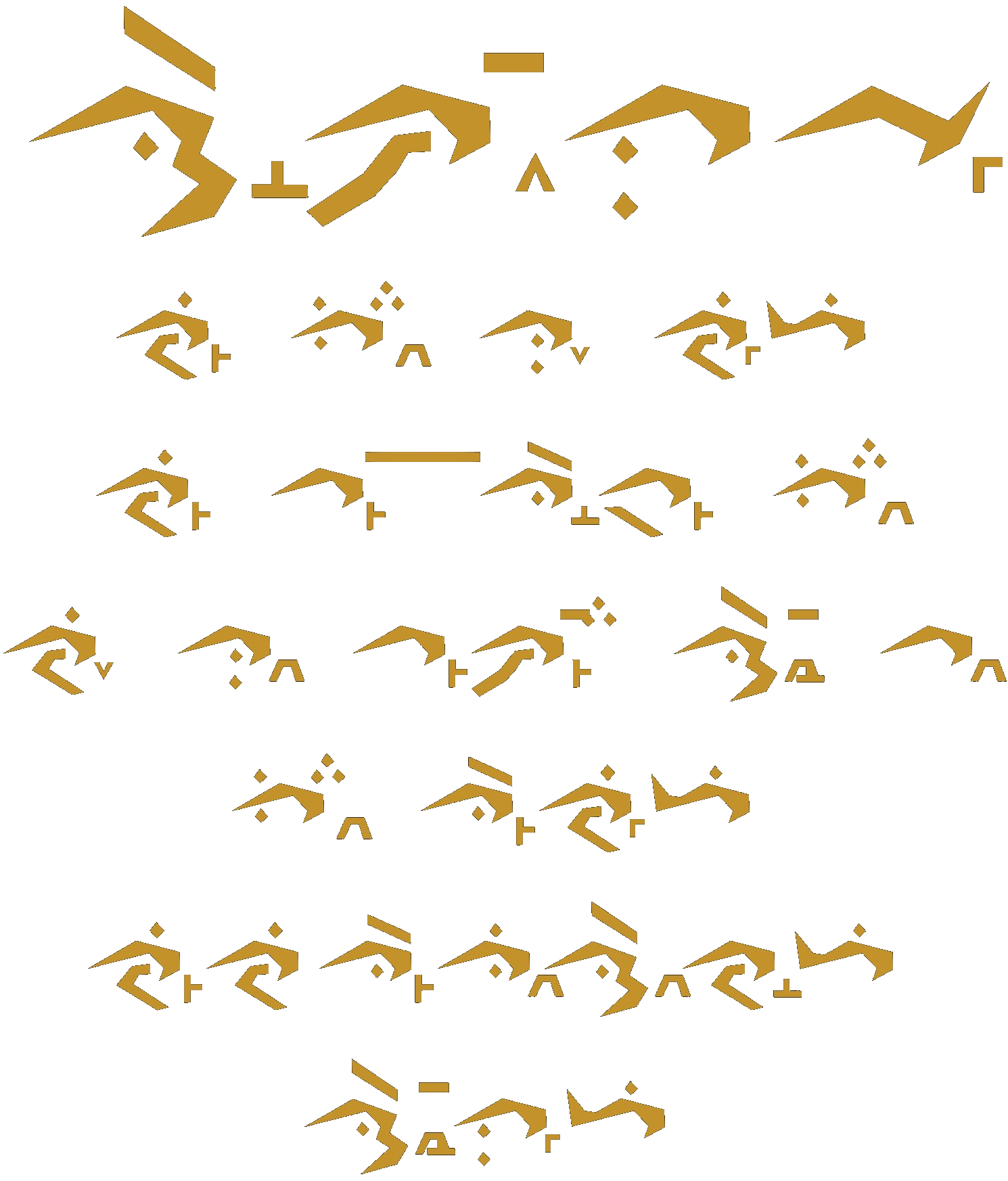
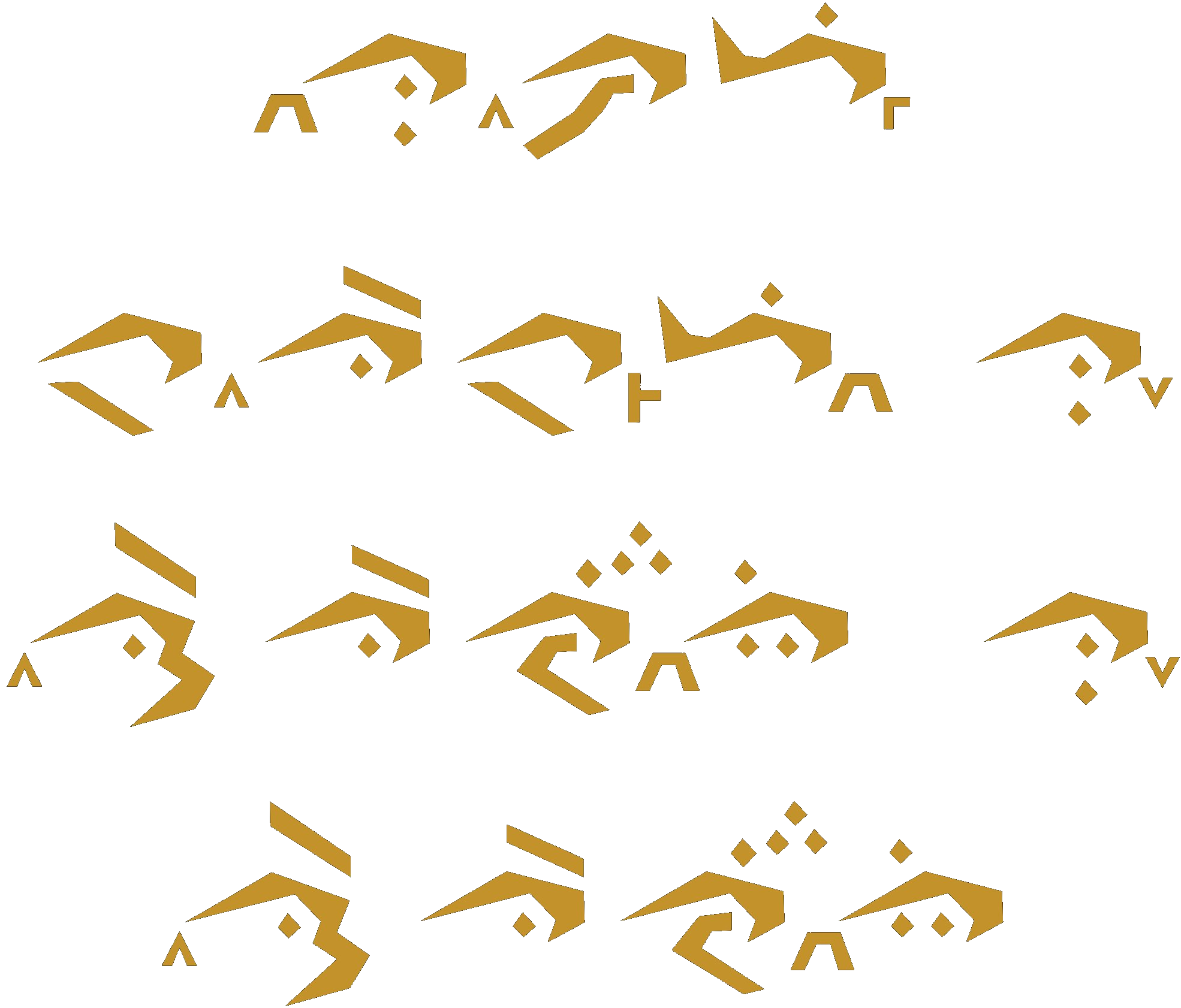
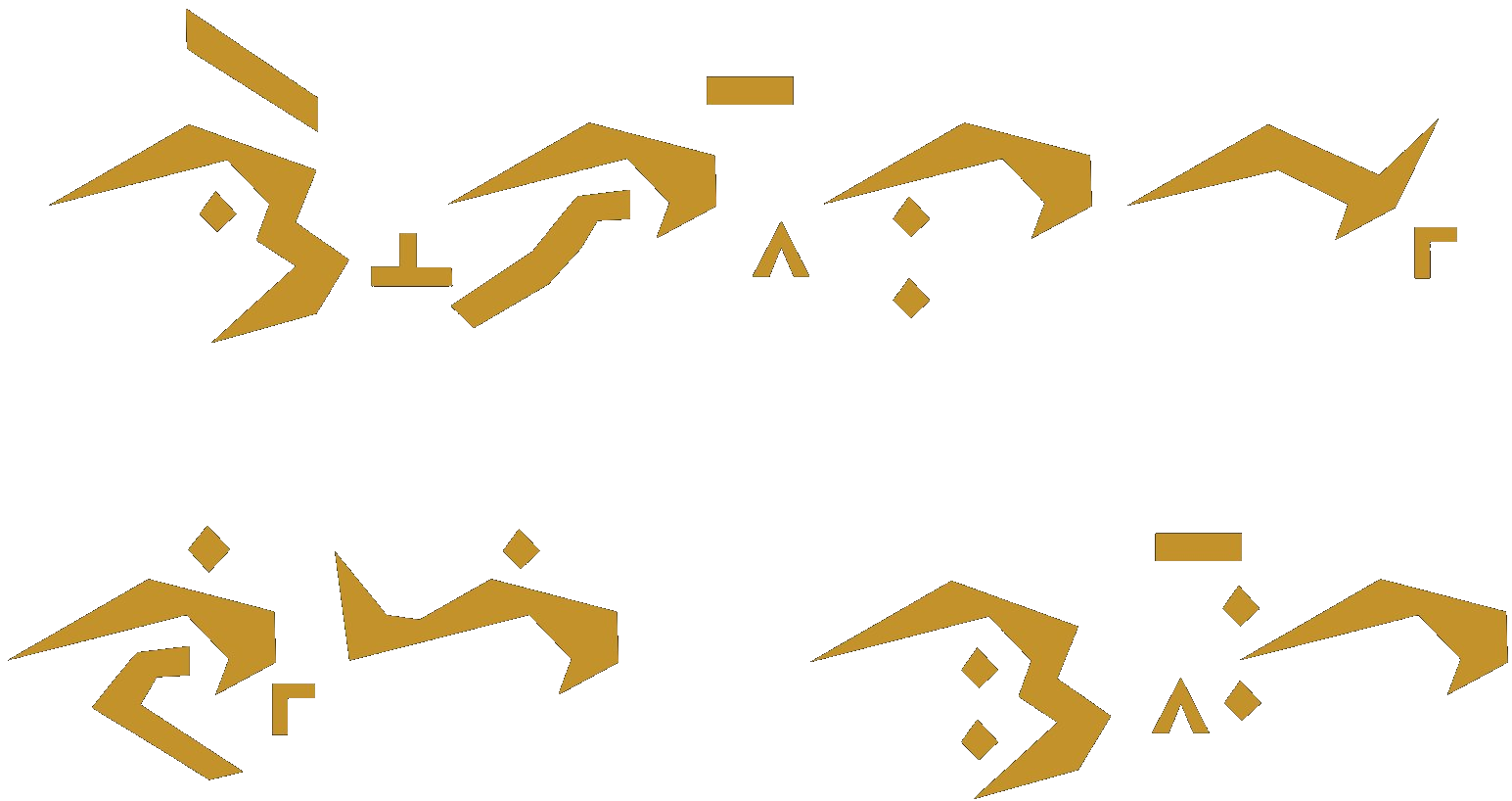
The Writing System
The Miluk Font
Miluk has historically been transcribed using Western alphabets and systems, and hardly any two systems across a century used the same Western transcription method. A mess.
Today, indigenous communities around the world and in the United States employ Western alphabets and notation as the primary way to represent their indigenous languages. While some communities have resisted this, like Sequoyah's Cherokee syllabary, I still wanted a script that was indigenous-first, not Western-based.
The Miluk font, in this regard, is most like Hangul, the Korean writing system, in that it attempts to represent how the sounds appear using linguistic ideas of point of articulation and method of articulation.
How it works
The environment for point and method of articulation is represented best by the /h/ sound in the Miluk font. The Miluk "h" is the shape of the mouth facing to the right, without other baggage. It is the most open, most basic sound the mouth makes, and the glyph reflects that.
To make a /b/ or a /p/ sound, you add lips to the mouth, because the lips come together. The only difference between the two is that /p/ has a dot above and /b/ has a dot below. In linguistic terms, a dot above means unvoiced. A dot below means voiced, since the voicing comes from the throat, below.
Every character in the Miluk font follows this logic. The glyphs are not arbitrary symbols assigned to sounds. They are pictures of what the mouth is doing, organized by a consistent system of dots and strokes that encode voicing, aspiration, and manner of articulation.
The font is currently used in image form on this site. A full Unicode conversion is planned, which will allow Miluk to be typed, searched, and shared digitally - a step toward the language living not only in speech but in text.